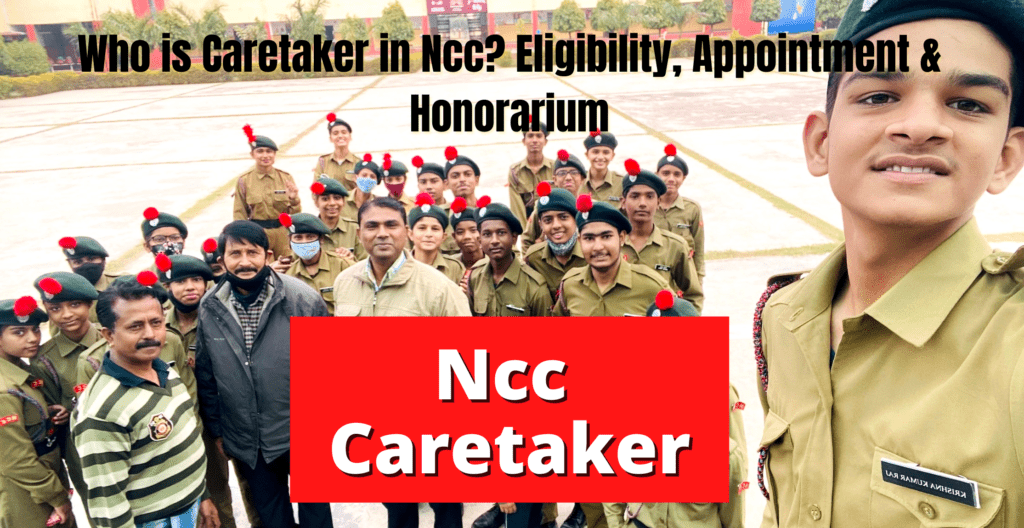
The National Cadet Corps (NCC) is more than just a youth organization. It’s a symbol of discipline, unity, and patriotism that has shaped millions of young Indians since 1948. This article is useful for an NCC cadet, a parent, or someone simply curious about this prestigious organization. So, understanding the NCC flag, motto, and song. Also, know it’s essential to appreciate its rich heritage.
Let me take you through these iconic symbols that every NCC cadet carries with pride.
The NCC Flag: A Symbol of Unity and Strength
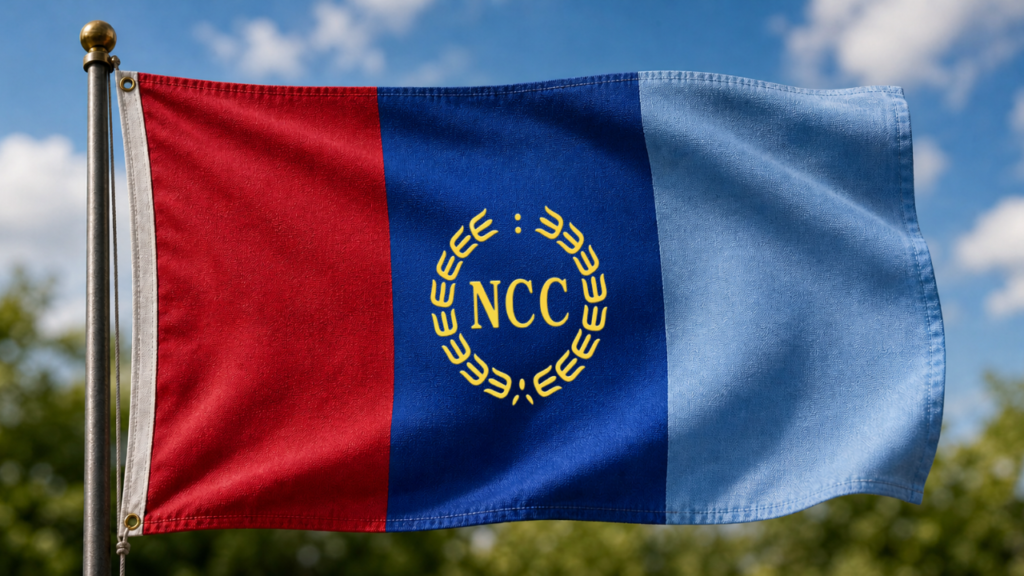
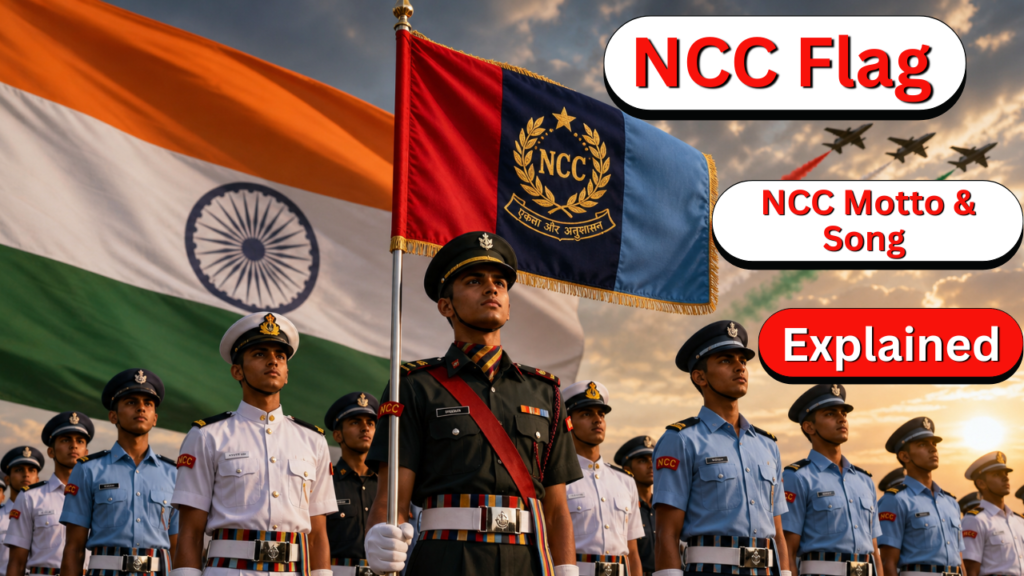
The NCC flag is a powerful emblem that represents the tri-services nature of the corps. When you see an NCC cadet marching with this flag, you’re witnessing a legacy that spans over seven decades. So, let’s find out its history.
History
The flag was first introduced in 1951. Various regiments of the Army used a flag of the same pattern, colour, and size. But, it had the NCC badge and unit designation placed in the centre. However, in 1954, the existing tricolour flag was introduced.
Design and Colours
It features three vibrant colours arranged in vertical stripes. Really, it looks so beautiful. Actually, these tri-colours represent three parts of the defense forces:
- Red (representing the Army)
- Deep Blue (representing the Navy)
- Light Blue (representing the Air Force)
You’ll find the NCC crest in gold embroidered at the centre. The crest showcases the letters “NCC” encircled by a wreath. However, this seventeen-petal lotus wreath symbolizes the 17 NCC Directorates.
What Makes It Special?
It isn’t just clothes and colours. In fact, it represents the dreams of young Indians. The Youth who aspire to serve their nation. Importantly, the NCC camp or parade hosts the flag every time. However, it reminds the cadets of their commitment to character development, discipline, and a secular outlook. In fact, the flag is the symbol of the identity of a troop or group.
The NCC Motto: “Unity and Discipline
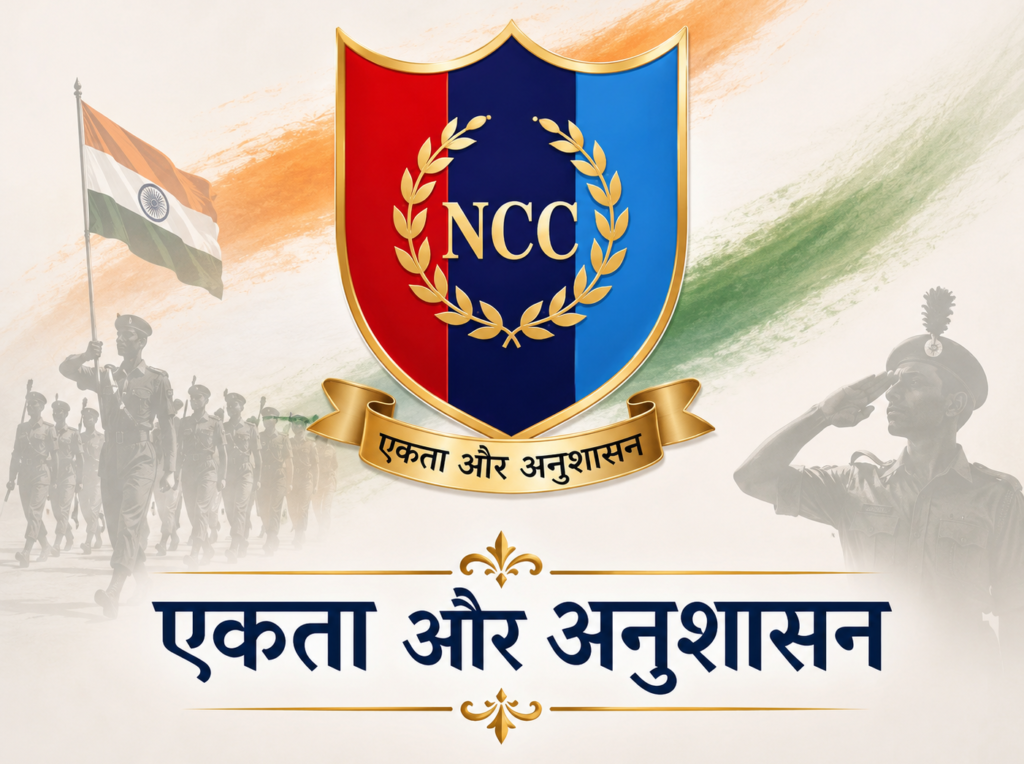
If there’s one phrase that defines the NCC experience, it’s the motto: “Unity and Discipline” (Hindi: “Ekta aur Anushasan”). Why moto is important? What it does, let’s find out.
History
On 11 Aug 1978, the 11th Central Advisory Committee (CAC) meeting discussed the need for a motto for NCC. So, the suggestions for the motto were ‘Duty and Discipline, Duty’, ‘Unity and Discipline’, ‘Duty and Unity’, and ‘Unity and Discipline’. Finally, “Unity and Discipline” was selected as the motto for the NCC on 12 Oct 1980.
Why This Motto?
These aren’t just words to memorize—they’re principles to live by:
“Unity” teaches cadets to:
- Work together regardless of religion, region, or language
- Build brotherhood among diverse communities
- Understand that strength lies in togetherness
- Respect different cultures and traditions
Discipline indicates:
- Self-control and punctuality
- Respect for authority and rules
- Time management skills
- Mental and physical resilience
Real-Life Impact
Former NCC cadets often credit this motto for their success in professional life. Wherever you are in the armed forces, corporate sectors, or civil services, the values of unity and discipline of NCC training become lifelong assets. In fact, the motto always reminds us of the hard work, motivation, and true dutifulness to do our best.
The NCC Song: Hum Sab Bhartiya Hain‘
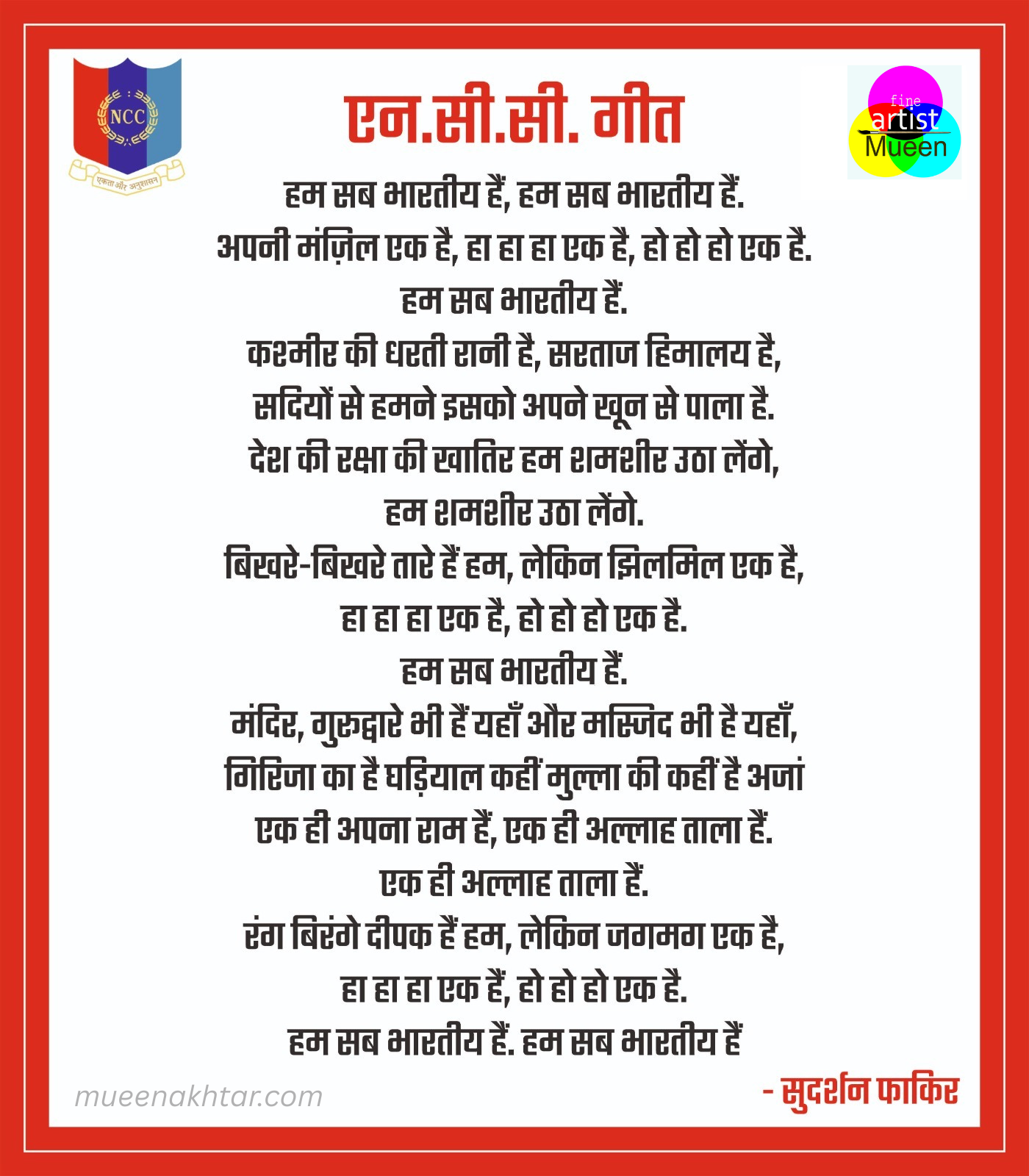
The NCC song is the emotional heartbeat of the organization. Officially titled “Hum Sab Bharatiya Hain”. This anthem unites cadets across the nation. Here, the full song in Hindi is in the image.
English Translation
“We are all Indians, we are all Indians, our destination is one, yes, yes, yes, it is one
The land of Kashmir is queen, crowned by the Himalayas. For centuries, we have nurtured it with our blood. For the defence of the country, we will raise our sword. We will raise our sword
We are scattered stars, one ray, many reflections. We are one, we are one, we are one. Our destination is one. We are all Indians”
When and Why It’s Sung
The NCC song is sung during:
- Republic Day and Independence Day celebrations
- NCC camps and training sessions
- Annual Training Camps (ATC)
- Passing out parades
- Special NCC events and ceremonies
There’s something incredibly moving about hearing thousands of young voices singing this song in unison. Actually, it creates goosebumps and fills you with an indescribable sense of national pride.
Interesting Facts About NCC Symbols
- NCC flag was officially adopted in 1954, six years after the NCC was established.
- The song “Hum Sab Bharatiya Hain” was composed by Sudarshan Faakir.
- 17 petals in the lotus wreath represent the 17 directorates of NCC across India.
- The motto was chosen to address the post-independence need for national integration.
- Over 13 lakh cadets currently serve under this flag across schools and colleges.
Conclusion: More Than Symbols—A Way of Life
The NCC flag, motto, and song aren’t just ceremonial elements. But they’re the soul of an organization. In fact, these initiatives have transformed millions of young Indians into disciplined and responsible citizens. Generally, we see these symbols at a school parade or a national celebration. However, they represent decades of service, sacrifice, and the unified spirit of Indian youth.
For current cadets, wear these symbols with pride. For alumni, cherish the memories they evoke. And for new joiners, know these symbols. Generally, they will become an integral part of your identity. Also, they will guide you long after your NCC days are over.
The red, blue, and light blue of the flag; the powerful words “Unity and Discipline”; and the stirring melody of “Hum Sab Bharatiya Hain”—these aren’t just symbols of the NCC. In fact, they’re symbols of the India we’re building together, one cadet at a time. Therefore, all these things help a cadet to be a motivated and trained citizen.
Jai Hind!
Related Posts
- NCC Flag, Motto, and Song Explained
- 25 Frequently Asked Questions About NCC Answered
- 10 Amazing Benefits of NCC Every Student Should Know
- Benefits of Joining NCC

- Combined Annual Training Camp (CATC)

- Ncc Camp | Ncc Camp Training

- 10 Reasons Why You should be an ANO / Ncc Officer

- Ncc Refresher Course- My experience

- Caretaker in Ncc | Ncc Caretaker