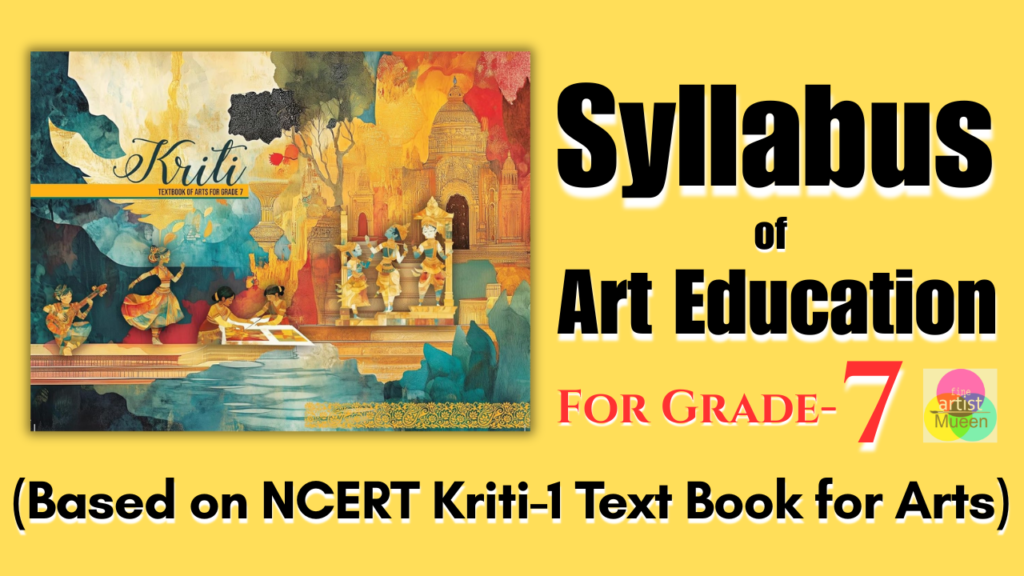
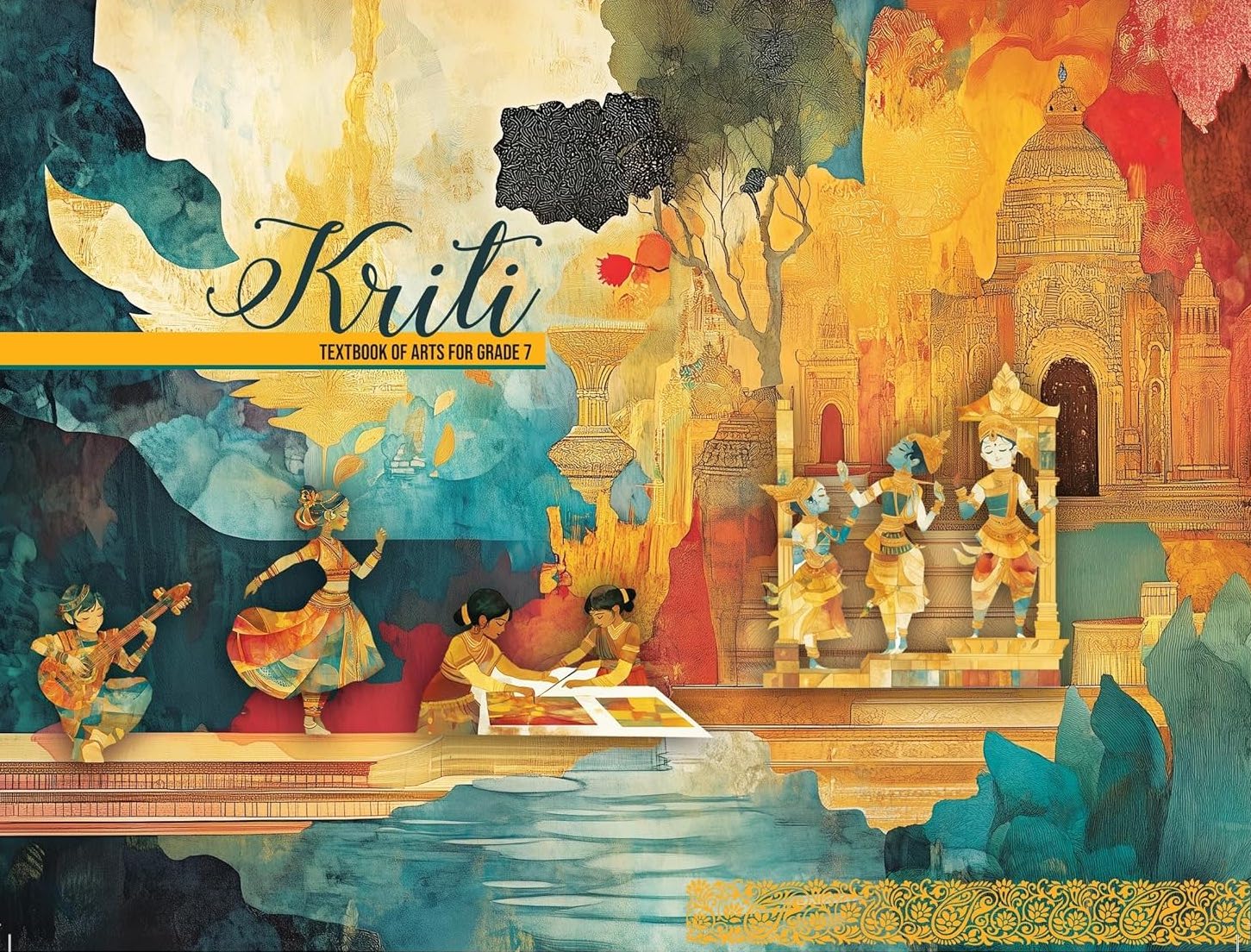
As per the NCERT Kriti-I Textbook for Arts for grade 7, the textbook has four sections: Visual Arts, Music, Dance, and Theater. Art Education Syllabus for grade 7 based on the NCERT Kriti-I textbook for arts for grade 7.
Based on Kriti-I, Art Education Syllabus for grade 7, here is the Detailed Syllabus of Visual Art Sections as per the content of the Kriti-I Textbook for Arts for grade 7:
VISUAL ARTS SYLLABUS
Unit 1: Objects in Icons and Symbols
Introduction, use and importance of Icons or symbols, how objects are represented as Icons or symbols. Use of symbols and Icons in logos, signage, and even as emojis. Drawing of Objects in 2D and 3D and transforming them into Icons or symbols.
Activity
- Understanding Simple Icons
- Drawing One Object in Different Ways
- Icons for Signages
- Objects as Symbols
Unit 2: Unit 2: Nature’s Palette
Colours are the most important part of an artwork. Colour theory, explaining the colour wheel and the classification of colours. Use of tone, shades and tint, their meaning, uses and importance. Colours from nature, colours in miniature paintings, colour sources and art materials and tools. Colour palette of miniature painting.
Activity
- Extend the Colour Wheel
- Make colour Tones
- Plant Study in Colour
- Decode the Palette of a Miniature
Unit 3: How You Feel
A study of many aspects of the human body and facial expressions. Proportion of the human head, drawing of facial expressions. Exploration of a rock-cut sculpture in Mahabalipuram. Clay reliefs depicting facial expressions.
Activities:
- Act and Guess
- Proportions of the Human Head
- Drawing Facial Expressions
- Let us Travel Black in Time
- Everybody has a Beautiful Story
Unit 4: Textiles Traditions
Indian textiles are known for a variety of motifs. Motifs have a symbolic meaning of their own. They are created with a particular image that usually repeats and form pattern. Motifs vary region to region and can be seen on fabric. Introduction of textile traditional block design, experiment with block design on paper, fabric and other surfaces. Introduction of embroidery traditions, patchwork, fabric journey & textile artwork.
Activities
- Fabric Journey
- Explore Embroidery Traditions
- Basic Stitches in Embroidery
- Make your Textile Artwork
Unit 5: The Art of Calligraphy
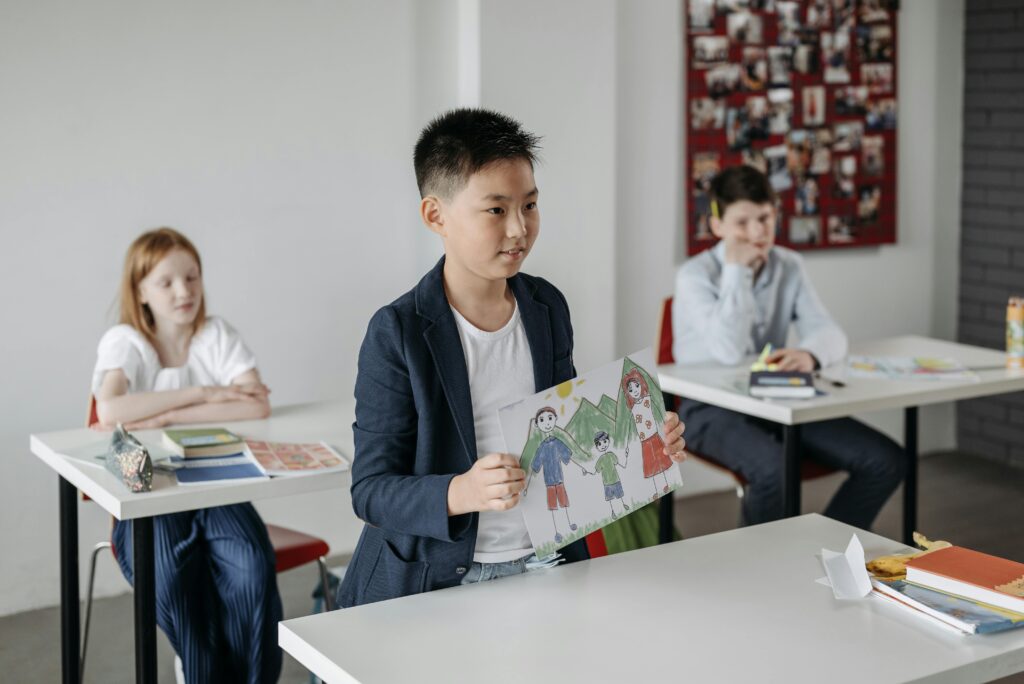
This unit introduces the art of calligraphy, exploring the evolution of scripts and the expressive potential of letters. Students learn about letter anatomy, styles, and tools while experimenting with different writing techniques. Activities focus on observing, creating, and arranging letters creatively, helping learners convey emotions, develop design skills, and apply calligraphy in posters and visual compositions.
Activities
- Looking at Letters
- Letter Hunt
- Similar But Different
- Writing like We Speak
- Calligraphy in Posters
Unit 6: Integration of All Art Forms- Sculptures Come Alive!
This unit focuses on integrating visual art, music, dance, and theatre through creative activities inspired by sculptures. Students develop storytelling, collaboration, and performance skills by creating narratives, adding movement, dialogue, and music. It encourages imagination, cultural understanding, and expression while connecting art forms to bring historical sculptures to life.
Activities
- Stories in Stone
Teacher’s Corner
Download these useful documents here:
- Art Education Syllabus for Grade-8 in PDF
- Art Education Syllabus for Grade-7 in PDF
- Art Education Syllabus for Grade-6 in PDF
- Split of Syllabus for Grade-8
- Split of Syllabus for Class-6
- Split of Syllabus of Visual Art for Class-7
- Art Education Syllabus for grade 8 CBSE | Based on Kriti Grade 8
- Art Education Syllabus for grade 7 CBSE | Based on Kriti Grade 7
- Art Education Syllabus for grade 6 CBSE | Based on Krit-I Grade 6
- Indian Miniature Painting | भारतीय लघु चित्रकला
- Digital Art | डिजिटल आर्ट
- Chitrasutra | चित्रसूत्र क्या है?